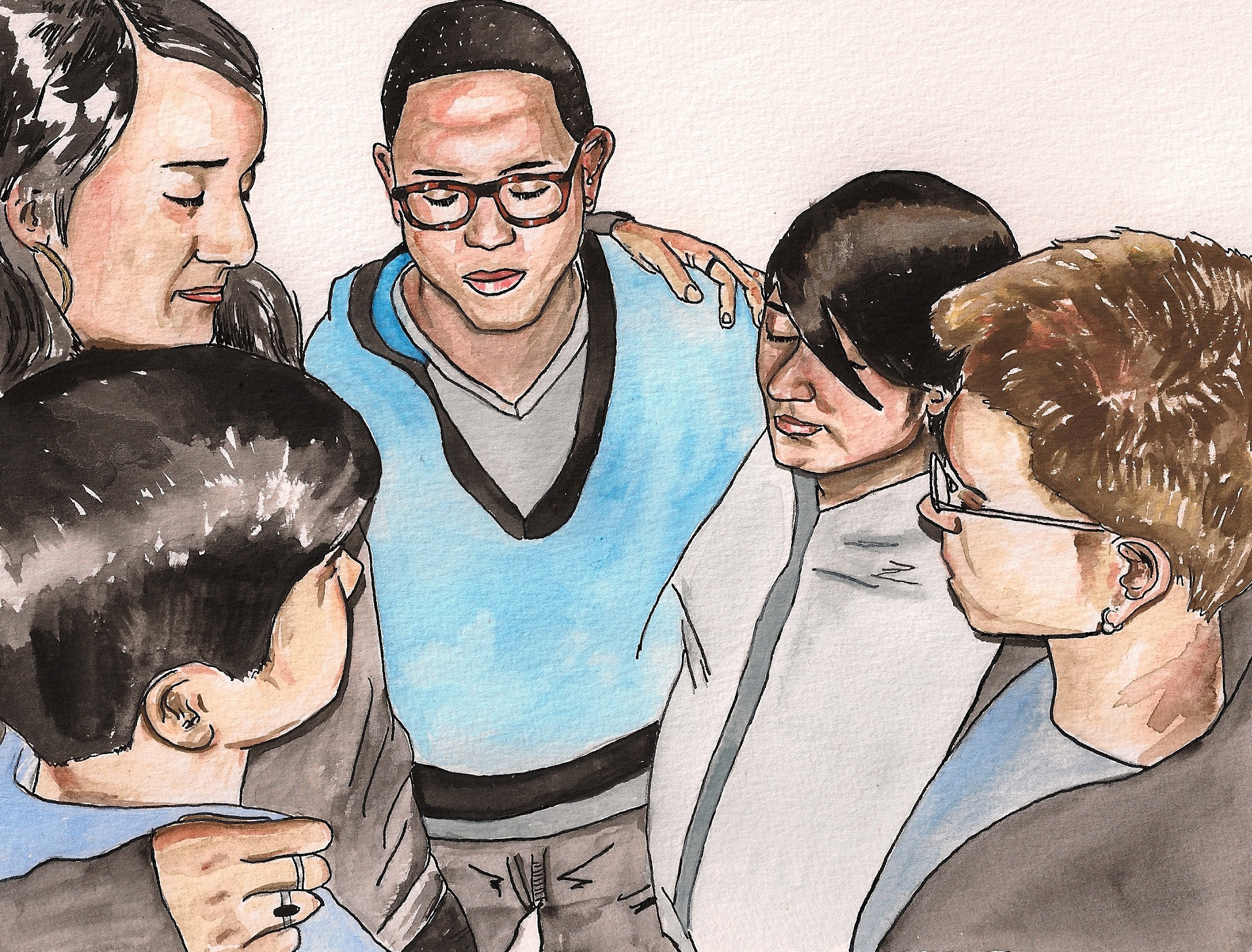
The politics of disaster relief

For more info on responsibly supporting Haiti, this article by Tim Wise breaks down some ideas in a way that might be helpful in talking friends or family out of making their donations through huge and/or U.S.-funded aid organizations: “The problem is that aid goes not to projects or services but first to service providers, the agencies themselves. And aid is power. Those who get more aid end up stronger than those who don’t.”

It’s terrifying how easily grassroots support can be mobilized for “aid” that is actually a militarized imperial project. Media coverage of disasters like this is so empty of social/economic/political history – and so filled with incredibly painful images of suffering – that we get traumatized into sending whatever donation we can to the most publicized agencies in order to relieve the immediate devastation we’re seeing. But as Tim Wise points out, “More than half the budgets of most of the largest US-based aid agencies come from the US government…[and] those agencies naturally tend to be accountable mainly to the US government, not…to the local community they serve.”

And as we all know, the U.S. government is not about helping Haiti. The U.S. government is about dominating Haiti through coups, occupations, embargos, and privatization. U.S. imperialism and capitalism are the reason that this earthquake was so devastating – the reason that so many buildings were poorly constructed and collapsed into rubble, that hospitals and clinics were understocked and understaffed, that basic infrastructure and emergency services were so inadequate – the reason that Haiti is the poorest country in the Western hemisphere.

And imperialism and capitalism are the reason that the U.S. is responding to this crisis with massive militarization, and calling it aid. Over and over again, the U.S. has exploited crises like this to push through devastating economic policies that rebuild poor nations into privatized, dependent wastelands filled with resorts for rich Westerners. Aid from the U.S. government can’t be disentangled from the violent disaster capitalism that Naomi Klein talks about here and in The Shock Doctrine.

Already, U.S. response to this earthquake looks sickeningly like what went down all too recently in New Orleans after Katrina, when (poor, Black) survivors were criminalized for attempting to help themselves and their communities, the city was militarized, and billions of dollars of money pledged in aid was tied up in huge organizations like the Red Cross and kept out of the hands of local, grassroots groups.

The compassionate response to the Haitian earthquake from so much of the U.S. and global population is amazingly powerful and heartfelt. It could be an opportunity to send major support to independent Haitian organizations that are helping their own communities, but those organizations are left struggling while millions of well-meaning people in the U.S. text $10 donations to the Red Cross on their cell phones. In the aftermath of a crisis, of course we want to do whatever we can to help, but it’s so unfortunate that the organizations that are able to take the most advantage of that are the ones that are so dubious in terms of their accountability to long-term local struggles.

Six human rights groups issued a statement calling for aid that is grounded in human rights, sustainability, and self-determination for all Haitians:

“There is no doubt that Haiti’s hungry, thirsty, injured, and sick urgently need all the assistance the international community can provide, but it is critical that the underlying goal of improving human rights drives the distribution of every dollar of aid given to Haiti,” said Loune Viaud, Director of Strategic Planning and Operations at Zanmi Lasante. “The only way to avoid escalation of this crisis is for international aid to take a long-term view and strive to rebuild a stronger Haiti-one that includes a government that can ensure the basic human rights of all Haitians and a nation that is empowered to demand those rights.”

More Haiti resources

I walked into the gym this morning at 7am to find people gathered around a TV screen, weeping over the coverage of the most recent earthquake in Haiti early today. I can’t imagine what survivors must be going through.

Several people sent me these resources, and I wanted to share them here:

Statement from INCITE! and the Women’s Health and Justice Initiative in New Orleans: Haiti: Responding to the Situation

“As these important efforts are underway, we recommend that we also pause and ask the question: How can we intentionally support the long term sustainability and self determination of the Haitian people?”

ONE Petition to cancel Haiti’s debt

“Dear Finance Ministers, IMF, World Bank, Inter-American Development Bank and bilateral creditors,As Haiti rebuilds from this disaster, please work to secure the immediate cancellation of Haiti’s $1 billion debt and ensure that any emergency earthquake assistance is provided in the form of grants, not debt-incurring loans.”

Haiti resources

As I’m sure is true for all of you, my heart is breaking over this new devastating human catastrophe made infinitely more desperate by poverty and imperialism – over all of the immediate suffering, as well as the all-too-likely possibility that this tragedy will be used by the U.S. and corporate interests to push forward even more brutal forms of capitalism in Haiti. I’m sure we’ve all been inundated with various links already, but I thought I’d consolidate a few that I’ve found helpful anyway.

We all know not to give through the Red Cross, right? Here’s why, and here’s why. Grantmakers Without Borders has this list of helpful criteria for disaster response:

  1. First and foremost, provide unrestricted general funding to allow resources to go where they are most urgently needed.
  2. Give only to those organizations with an existing presence in the region and a broad familiarity with local conditions, customs and politics. Avoid well-meaning but inexperienced organizations.
  3. Give only to organizations that engage local community members in all aspects of disaster response and recovery. Avoid top-down responders.
  4. Prioritize organizations with a strong focus on gender and the ways in which women are differently impacted during and after an emergency.
  5. Prioritize organizations that link emergency response with recovery and long-term rehabilitation and that build local capacities.

Michelle O’Brien has compiled this very useful list of aid organizations, articles, and analysis on the earthquake. It’s public on Facebook, but for those who don’t have a Facebook account, I’ll cut and past it after the jump. I really recommend reading some of the articles she links to, and whatever other analysis you can find – as well as sending money, aid, and prayers, it’s so important to put this tragedy in a broader context and also respond by strengthening movements against the violent, powerful systems that make all natural disasters so catastrophic for poor people. Read the rest of this entry »

Anti-capitalism and spirituality

Have y’all seen the website Bolder Giving? It’s all about people who give away lots of money – like, way more of their money than is normally sanctioned by capitalist society. It’s not very explicitly political, but a lot of the profiles are really amazing and radical. Anyway, I participated in a conference call they hosted the other day because I thought it would be interesting to report back for Enough. It was a conversation with Tom Hsieh, a high earning executive who decided with his partner to live at or below the national median household income and give the rest of their family’s income away, which they’ve been doing for years.

There are lots of interesting questions bound up in this story (how do we make decisions about what is “enough”, etc), but one of the things that stuck with me from the call was a moment when we were talking about spirituality. Tom and his partner are religious, and their choice to give away such a large percentage of their income is connected to their faith and their belief in god. Tom talked about his experience of feeling provided for by god even while making the choice to sacrifice a lot of the things that people often think they need to be secure. 

Faith and spirituality are such a crucial part of these conversations for me, not because I believe in god but because I think that any questions about how to live in a just way in such an unjust world are fundamentally spiritual, because they have to do with our beliefs about humanity and what we think is possible and things like justice and hope and goodness. During the call, I was completely identifying with Tom in terms of how faith affects my choices about money and giving, even though our belief systems are probably really different.

When I decided to give away most of the money I inherited, a lot of people around me (family etc) were flipping out because it wasn’t a “responsible” decision and they were really worried about me being safe and secure. I was very unworried, because class privilege and rich family give me a huge safety net (same way that Tom’s high-paying job gives him a huge safety net), no matter what I do with the money I have access to now.

But the other reason why it wasn’t a hard decision to give away that money was because I gave it to support things I believe in so much. I believe in deep, systemic, transformative change. I believe in a world without prisons. I believe in ending violence without relying on systems of policing and incarceration. I believe in a world in which everyone has access to housing, healthy food, ancestral wisdom, safety, community, and human dignity. I believe in those things even though they’re big and intangible and hard to quantify, and even though giving some money to organizations that are working towards that world is (as my dad often reminds me) a small act in terms of measurable impact. I don’t think about giving away money in terms of impact – I just think about it in terms of doing the right thing, the thing that is the most true to my deeply held beliefs.

And I would rather put my faith in that vision – of a world based on liberation, where people share resources freely and everyone has what they need – than put my faith in the much more tangible security of things like a big retirement fund and lots of insurance, even though the latter things are tangible and – for me – fairly easily attainable. On a spiritual level, I don’t think those things provide real security. (Not to say that material security isn’t important and necessary – just that it isn’t necessary at the extreme level that capitalism teaches us to strive for.) I think real security comes from things like community, caretaking, love, and recognizing our interconnectedness with other people. Acting according to those values makes me feel provided for and safe and connected, in a way that felt similar to what Tom was saying about feeling provided for and connected to god.

I’m remembering this old thread on Dean’s livejournal in which many people have brilliant and thought-provoking things to say on this topic. Dean writes:

capitalism is based on or produces a notion that people are fundamentally selfish, greedy, and individual, that it isn’t safe to share because you won’t be taken care of, that private property is innate and natural. i believe that people are fundamentally connected, well-intentioned, generous and caring. i have no solid singular proof of this, it’s too general to prove, it’s a matter of faith. i also believe that capitalism is unsustainable and change will occur, and that change can be less violent and more beneficial if we do key work now to set up community resources, political education, to redistribute wealth and power in ways that allow for new political leadership, etc.

I want to pick this conversation back up – I’m curious about ways that your faith and spirituality and religious traditions are connected to how you think about the work you do for justice and liberation, and the choices you make about money and giving.

Give a chance for peace

Happy winter, everyone. Anticapitalist musings are in the works, but for now I cannot help but share this video starring my friend’s friend’s brilliant daughter. You don’t need so much dollars anymore!

Give a Chance 4 Peace (8mins) from T’chaka Sikelianos on Vimeo.

post-MMMC

I just got home from Making Money Make Change and feel the usual combination of energized/agitated/inspired/frustrated and emotionally demolished. I want to write so much and I have a lot of processing to do, but for now all I can do is sleep.

I do want to say that the workshop Tiny and I did (I think we called it something like Community Reparations and Interdependence) was really inspiring for me and the conversation interestingly turned to the theme of “moving back home” that keeps popping up everywhere recently. There is much to say on this topic and I’d like to share both this guest essay on Jessie’s blog that I’ve been meaning to post for awhile, by Martha Jane about moving in with parents, and this recent piece by Jessie with some continuing reflections on this theme.

The idea of writing coherent reflections about MMMC is something I find highly intimidating due to my long-time entanglement (there’s so much to say but where do I start?), but I’m going to try. I think. After I sleep more.

p.s. For now let me reiterate these reflections from last year.

On giving money to social services “clients”

I ran across this essay and thought it might be of interest to Enough readers.  Calvin discusses the ethical dilemmas of being a social service provider to poor and homeless people and the pressure to set up professional boundaries and not share money with clients.  Read the rest of this entry »

Tax angst

I recently got a chance to co-facilitate a workshop designed by Wealth for the Common Good (they’re organizing rich people to fight for fairer tax policy) about wealth, taxes, and inequality. It was an awesome workshop and gave me the chance to a) get very in touch with how totally ignorant I am about basically anything having to do with taxes (and learn tons preparing for the workshop) and b) agonize over some frustrating political questions that I still don’t know how to think about.

So here’s the thing: the entire U.S. tax system is set up to maintain and increase incredible, horrifying wealth inequality. Income tax is hardly progressive; work (income from a paycheck) is taxed at a much higher rate than wealth (income from investments); inheritance taxes are minimal and under attack from rich conservatives who believe that freedom means the freedom for really rich people to get really REALLY rich. Learning the details of all of this stuff is enraging and really illustrates how tax policy is a major contributing factor to all the forms of structural violence and inequality that we fight against.

So what’s the solution? Wealth for the Common Good has a campaign to make rich people pay more taxes, which seems like a good idea. I obviously don’t believe that anyone should be allowed to accumulate massive wealth even in the best of times; right now, in a recession that’s causing widespread poverty and cuts to already insufficient public resources everywhere (here in Philly, we just barely avoided passing a “Doomsday” budget that would have resulted in the layoff of 3,000 city employees and forced the closing of every single public library in the city), taxing the rich more seems like an important and obvious thing to fight for.

Except, the government already has lots of money, and is using it for war. And occupation. And policing and incarceration, and a long list of other things that are incredibly objectionable. Money for public services has been scarce since Reagan – not for lack of funds, but because cutting social spending (and privatizing everything) is a basic tenet of neoliberal capitalism. People aren’t fighting universal healthcare because the government can’t afford it; they’re fighting it because anything resembling a social safety net has been practically criminalized.

I get that taxation is essentially the only real mechanism for wealth redistribution that exists in our current structure. But I guess when I talk about wealth redistribution (the involuntary kind, not philanthropy), I’m more thinking about socialist revolution – not directing more money towards the federal government of an imperialist superpower.

The tax system does seem like an important (and often overlooked) target for economic justice struggles – I’m just having a hard time wrapping my head around the contradictions. Will the fight to get rich people to pay slightly more in taxes have a major effect on wealth disparity that will impact other things in positive ways? Are there other ways to accomplish the same goal of reducing wealth disparity that don’t also fund the military and police? How does a campaign around tax policy intersect with critiques of capitalism and imperialism? 

Is there a simpler (or more complex) way of thinking about taxes and economic justice that is less fraught with political ambiguity?

student loans, scarce jobs, professional expectations

I just finished my annual workshop for Seattle University Law students entitled “Money Problems: Balancing a Commitment to Social Justice with Concerns About Financial Security.”  I thought I would share the format of the workshop in case people find it useful to engage similiar conversations in other spaces. Read the rest of this entry »

Musings on Returning Home: guest post by Jessie

On the continuing theme of reflections from the POOR session, here’s a guest post by the fabulous and thoughtful Jessie Spector:

I went to POOR Magazine’s Revolutionary Change Session with many layers of privilege to work with. I’m a queer white girl who grew up in a small-liberal-bubble kind of town, well-intentioned but pretty sheltered. My mom is of true WASP blood (White Anglo-Saxon Protestant), her particular strand of the family more liberal than most but still carries elite-isms and quite a bit of wealth. My dad grew up working class with non-religious Jewish parents who had met at a Young Communist meeting back in the day. Together they produced me: currently 22 years old and living in Brooklyn NY, after graduating from an elite private college and inheriting a couple hundred thousand dollar trust fund almost two years ago. I work at Resource Generation- a saving grace for me over the past few years- and have been long involved in queer organizing, and anti-prison work; more recently thinking increasingly deeply on how to align everyday living with the Big Visions of resisting capitalism and exploitation.

Following the introduction to Tyrone’s latest post–that apparently “blogging is an appropriate forum to post thoughts that aren’t necessarily fully formed”–I’ve taken a leap of faith to share these musings. This started as a journal entry on the flight home from the Bay, the weekend of the POOR session. On the first morning of the session several POOR Scholars spoke about home, family, community; leaving, staying, the privilege wrapped up in it all. I latched onto that theme and it stayed with me through the rest of the weekend and clearly beyond. The thoughts below are very much in progress, hardly resolved or even coherent. I would love for this to get the juices of discussion flowing- please give responses, feedback, questions, opinions, push-back, or anything else you want to offer. Read the rest of this entry »

Designed by theCoup.org. Powered by WordPress. RSS feed for entries and comments.